December Redfish Fishing South Padre Island — Bull Reds, Cold Flats & Winter Tactics
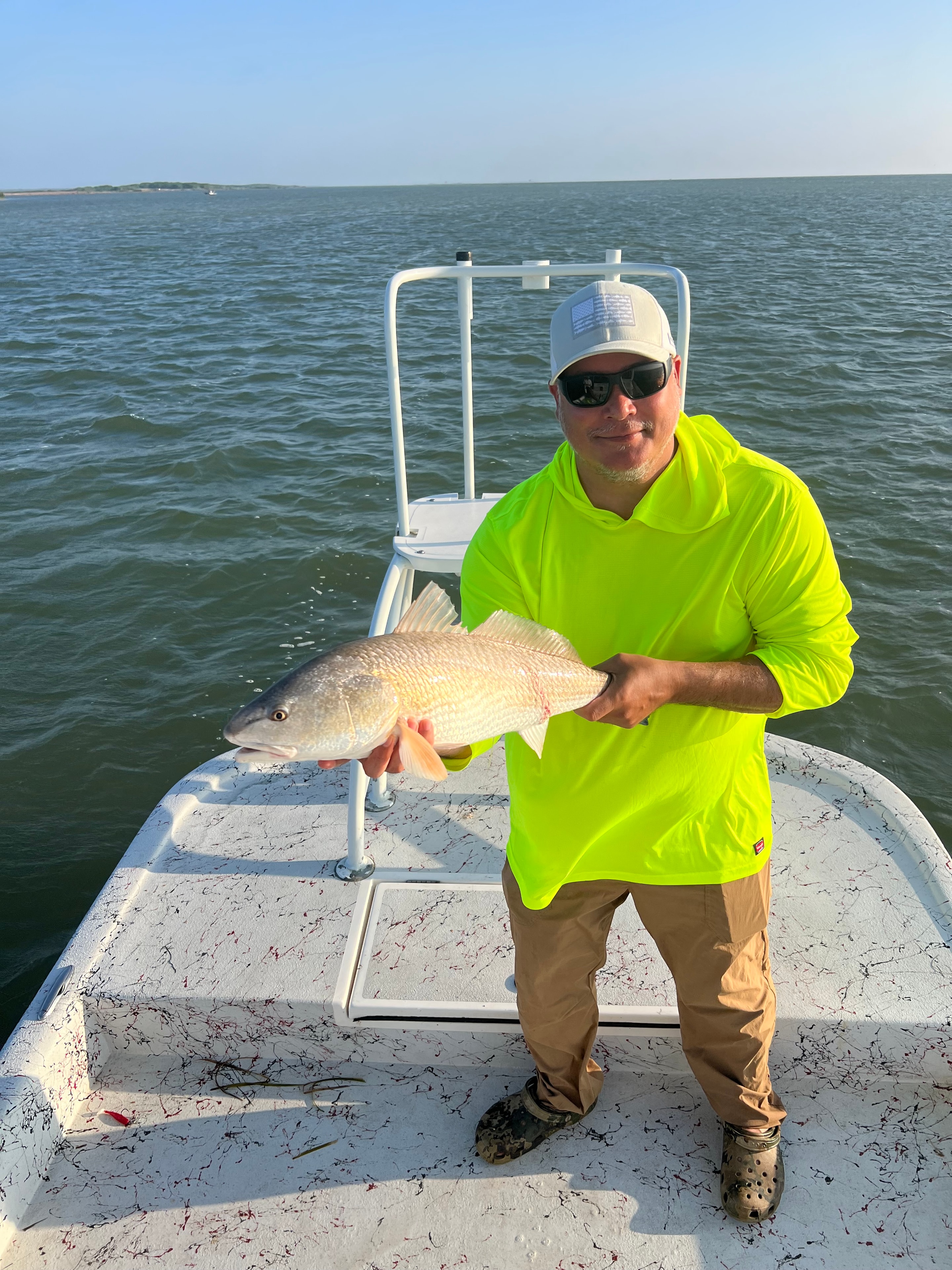
December is not a month most anglers associate with sight fishing. On the Lower Laguna Madre, it should be.
While the rest of the Texas coast slows down in winter, the Laguna Madre does something different. The water clears to near-perfect visibility. Boat traffic drops to almost nothing. And the redfish — specifically the big bull reds that have been feeding hard since September — settle into predictable winter patterns on the shallow flats. If you know where to look and how to approach them, December redfish fishing at South Padre Island is as good as it gets anywhere on the Texas coast.
Why December Is Prime Time for Redfish
The Laguna Madre is a hypersaline lagoon — saltier than the Gulf of Mexico — and it behaves differently than other Texas bays in winter. Three things happen in December that combine to create exceptional redfish conditions.
Water clarity peaks. The summer algae blooms are long gone. Cold fronts have flushed the bay repeatedly since October. Reduced boat traffic means less stirred-up sediment. December water clarity on the Laguna Madre is often the best of the entire year — visibility of 4 to 6 feet in 18 inches of water is common on calm days. You can see redfish tailing from 60 yards away.
Fish concentrate. Cooling water temperatures push redfish off the vast open flats they roam in summer and concentrate them in specific areas — dark mud flats that absorb solar heat, protected coves, and shallow areas adjacent to deeper channels. Once you find fish in December, you tend to find a lot of them.
Bull reds dominate. The slot-sized fish (18–28 inches) that made up most of the fall catch are now mixed with a higher proportion of bull reds — fish in the 28–40 inch range that are catch-and-release only in Texas. December is one of the best months of the year to encounter these fish on the shallow flats.
Water Temperature and Redfish Behavior in December
Understanding how water temperature affects redfish behavior is the key to consistent December fishing.
62–68°F — Active feeding window. This is the sweet spot for December redfish. Fish are mobile, willing to chase, and respond well to a variety of presentations. Early December, before the first hard fronts, often holds temperatures in this range. Expect fish to be spread across the flats and actively tailing.
55–62°F — Slower but catchable. Mid-December temperatures after a front or two typically fall into this range. Fish become more selective and less willing to chase. Presentations need to slow down significantly. The fish are still there — they are just less aggressive. Slow-dragged soft plastics and live shrimp become more important than reaction lures.
Below 55°F — Post-front recovery. After a strong December cold front, water temperatures can drop into the low 50s or even the upper 40s. Fish move to the deepest available water and become nearly inactive for 24–48 hours. This is not the time to fish the flats. Wait for the recovery.
The warming window. Regardless of the base temperature, December redfish fishing is heavily influenced by the daily warming cycle. Cold mornings mean sluggish fish. As the sun warms the shallows through mid-morning, fish become active and move up onto the flats. The best December redfish bite typically happens between 10 AM and 2 PM — plan your day accordingly.
6 Specific Locations for December Redfish
1. Dark Mud Flats — Solar Heat Magnets
Dark mud flats are the most important December redfish habitat on the Laguna Madre. The dark bottom absorbs solar radiation and holds heat, keeping these areas 2–4°F warmer than surrounding water. On cold December mornings, redfish move to these flats as soon as the sun begins warming them.
Look for flats with a dark, almost black bottom in 12–24 inches of water. The south-facing shorelines of the Laguna Madre hold the best dark mud flats because they receive the most direct winter sun. Fish these areas from mid-morning through early afternoon when the warming effect is greatest.
Approach: Wade quietly or pole your boat to within casting distance. Redfish on dark mud flats in December are often visible — look for tailing fish, nervous water, or the subtle V-wake of a moving fish. Cast 3–4 feet ahead of the fish and let the lure sink before beginning a slow retrieve.
2. Spoil Islands — Wind Breaks and Warm Water
The spoil islands that line the Intracoastal Waterway create protected pockets of water on their leeward sides. In December, when north winds are frequent and strong, these protected areas hold significantly warmer water than exposed flats. Redfish stack in these pockets, especially during and immediately after cold fronts.
The combination of wind protection, slightly warmer water, and the structure of the spoil island edges makes these areas reliable December producers. Fish the leeward side during fronts and the windward side during the post-front warming trend.
3. Shallow Grass Flats — 18 to 30 Inches
Sparse grass flats in 18–30 inches of water are classic December redfish habitat. The grass provides cover for baitfish and crabs — the primary December forage — and the slightly deeper water offers thermal stability compared to the shallowest flats.
December grass flat redfish are often visible as tailing fish working the bottom for crabs. The tailing behavior is more pronounced in December than any other month because the fish are rooting aggressively for bottom-dwelling prey rather than chasing baitfish. A gold spoon or soft plastic dropped just ahead of a tailing fish is one of the most exciting presentations in inshore fishing.
4. Brazos Santiago Pass — Tidal Movement and Baitfish
The pass connecting the Laguna Madre to the Gulf of Mexico is a major December redfish location. Tidal movement through the pass concentrates baitfish, and redfish stack on the edges of the channel to intercept them.
The best fishing at the pass happens on moving tides — both incoming and outgoing. Fish the channel edges, the sandy points on either side of the pass, and the shallow flats immediately inside the bay. December pass fishing often produces larger fish than flat fishing because the tidal current attracts the biggest bulls.
Timing: Fish the last two hours of an outgoing tide and the first two hours of an incoming tide for the most consistent action. Slack tide is typically slow.
5. Causeway Flats — Accessible and Productive
The flats adjacent to the Queen Isabella Causeway are some of the most accessible December redfish water on the island. The causeway pilings create structure that holds baitfish, and the adjacent flats warm quickly in the winter sun due to their shallow depth and dark bottom.
December causeway flat fishing is particularly good for wading anglers. The flats are firm enough to wade comfortably, the water is clear enough to sight fish, and the fish are predictably present throughout the month. This is also one of the best locations for anglers new to sight fishing — the combination of clear water, visible fish, and accessible wading makes it an ideal learning environment.
6. Protected Back Coves — Post-Front Refuges
After a strong December cold front, the most exposed flats become unproductive as fish move to deeper, protected water. The back coves and protected pockets scattered throughout the Laguna Madre become the primary redfish holding areas during these periods.
Look for coves with dark bottom, minimal wind exposure, and access to slightly deeper water (3–5 feet). Fish in these areas after a front are not actively feeding — they are waiting for conditions to improve. Slow presentations with live shrimp or a soft plastic dragged along the bottom are the most effective approach. Patience is required, but these areas can produce fish when the open flats are completely dead.
5 Proven December Redfish Techniques
1. Slow-Dragged Soft Plastics
The single most effective December redfish technique is a soft plastic paddle tail on a light jig head (1/8 to 1/4 oz) dragged slowly along the bottom. The key word is slowly — much slower than you think is necessary.
In cold water, redfish are not going to chase a fast-moving lure. They want the bait to come to them. A slow drag with long pauses — 3 to 5 seconds between movements — keeps the lure in the strike zone and gives fish time to commit. The bite in December is often subtle: a slight tick, a change in weight, or the line moving sideways. Watch your line carefully.
Colors: Chartreuse and white are the most consistent December producers. Shrimp-colored plastics (pink, tan, natural) work well when fish are keyed on shrimp. Darker colors (motor oil, root beer) can be effective on overcast days.
2. Gold Spoons for Tailing Fish
When you spot a tailing redfish on the flats, a gold spoon is the most reliable presentation. The flash and vibration of a spoon triggers the reaction strike that tailing fish are primed for, and the spoon's weight allows accurate casting at distance — important when approaching spooky December fish.
Cast 3–4 feet ahead of the fish and let the spoon sink to the bottom. Begin a slow, steady retrieve as the fish approaches. If the fish turns toward the spoon, slow down. If it turns away, speed up slightly to trigger a reaction. The strike is usually aggressive — December redfish that commit to a spoon do not nibble.
3. Live Shrimp Under a Popping Cork
When the bite is tough — after a front, in very cold water, or when fish are being selective — live shrimp under a popping cork is the most reliable fallback. The cork keeps the shrimp at the right depth, the popping action attracts attention, and the live shrimp is irresistible to a cold, slow-moving redfish.
Rig the shrimp 18–24 inches below the cork and work it with a slow pop-and-pause retrieve. The pause is critical — let the shrimp settle and swim naturally for 5–10 seconds between pops. Most strikes come during the pause.
4. Topwater at First Light
On calm December mornings before the cold sets in, topwater lures can produce explosive strikes from redfish that are actively feeding before the temperature drops. This window is short — typically the first 30–45 minutes of light — but it can be spectacular.
Walk-the-dog style topwaters (Spook Jr., She Dog) worked slowly across the surface are the most effective. The strikes are violent and visual, making this one of the most exciting forms of December fishing available. Do not sleep through this window.
5. Live Mullet for Bull Reds
If your primary target is the biggest bull reds on the flats, live finger mullet is the most effective bait. Bull reds in the 30–40 inch range are less interested in small shrimp and more interested in substantial forage. A live mullet on a free-line or light Carolina rig, cast ahead of a visible bull red, is the most reliable way to target the largest fish.
Live mullet are available from bait shops on the island throughout December. Rig them through the lips on a 3/0 to 5/0 circle hook and allow them to swim naturally. The strike from a bull red on live mullet is unmistakable.
Cold Front Strategy for December Redfish
December cold fronts are stronger and more frequent than November fronts. A well-timed trip around a front can produce the best fishing of the year — or the worst. Here is how to navigate them.
Pre-front (24–48 hours before): Barometric pressure is dropping, winds are shifting from south to southeast. This is often the best fishing of the entire front cycle. Fish are feeding aggressively ahead of the pressure change. Fish the open flats and grass beds with confidence.
During the front: North winds of 20–30 mph, rapidly dropping temperatures, and rough water make flat fishing difficult or impossible. Move to protected areas — spoil island leeward sides, back coves, deep channels. Fishing is tough but not impossible if you find the right protected water.
Post-front day 1: The wind has died but the water is still cold and dirty. Fish are in deep, protected water and largely inactive. This is the hardest day to fish. If you must go out, focus on the deepest available water with live shrimp.
Post-front day 2–3: The recovery window. Water is warming, fish are moving back onto the flats, and the bite is turning on. This is often the best fishing of the entire front cycle. Clear skies, calm water, and hungry fish that have not eaten in 24–48 hours. Target dark mud flats and grass beds in the warming afternoon hours.
Booking a December Redfish Charter
December is one of Captain Kevin's favorite months to run redfish charters. The fish are large, the water is clear, and the sight fishing opportunities are exceptional. Winter Texan season means more anglers on the island than most people expect — book 2–3 weeks in advance for most December dates.
Charter pricing: $550 for 2 people, $100 per additional angler, maximum 4 guests. 6-hour trip. All equipment provided. $100 non-refundable deposit to hold your date.
Contact Captain Kevin to book your December redfish charter or call directly at (956) 433-7287 to ask about current conditions and availability.
Frequently Asked Questions
Are redfish active in December at South Padre Island? Yes — December is one of the best months for redfish on the Lower Laguna Madre. Bull reds stack on shallow flats, water clarity peaks, and sight fishing opportunities are exceptional. The key is timing your fishing around the daily warming cycle and the cold front pattern.
What size redfish can I expect in December? December produces a mix of slot-sized fish (18–28 inches) and bull reds (28–40 inches). The proportion of bull reds is higher in December than most other months. All bull reds over 28 inches are catch-and-release only in Texas — one per person per day as a trophy exception.
What is the best lure for December redfish at South Padre Island? A slow-dragged soft plastic paddle tail in chartreuse or white is the most consistent December producer. Gold spoons are the best choice for sight fishing to tailing fish. Live shrimp under a popping cork is the most reliable option when the bite is tough after a cold front.
What water temperature is best for December redfish fishing? The 62–68°F range produces the most active feeding. Fish are still catchable down to 55°F with slower presentations. Below 55°F, fish move to deep protected water and become largely inactive for 24–48 hours after a front.
Is December a good month for sight fishing redfish? December is arguably the best month for sight fishing on the Laguna Madre. Water clarity peaks, boat traffic is minimal, and tailing redfish are visible from 50–60 yards on calm days. The combination of clear water and concentrated fish makes December exceptional for sight fishing.
How far in advance should I book a December redfish charter? Book 2–3 weeks in advance for most December dates. Christmas week and New Year's dates fill faster — book those 4–6 weeks out if possible. Winter Texan season means more anglers on the island than most people expect.
Book Your December Winter Charter — Bull Reds Are Waiting
December is prime time on the Laguna Madre — clear water, tailing bull reds, and zero crowds. Captain Kevin's calendar fills fast during Winter Texan season. Lock in your date now.
Licensed USCG Captain · Private Bay Charters · South Padre Island, TX
Combine fishing with a SpaceX launch — see the SpaceX charter