Flounder Fishing South Padre Island — October & November Season Guide
If you fish the Laguna Madre long enough, you learn to pay attention to the calendar in October. The water cools, the baitfish start moving, and the flounder — which have been scattered across the bay all summer — begin stacking up in predictable places as they prepare for their fall migration offshore.
It is one of the most reliable windows in South Texas fishing. For four to six weeks every fall, flounder are catchable, concentrated, and hungry. Miss it and you wait another year.
I have been guiding charters on South Padre Island for years, and the October–November flounder run is one of my favorite times to be on the water. Here is everything you need to know to make the most of it.
Why October and November Are Peak Flounder Season
Southern flounder — the species we target on the Laguna Madre — are year-round bay residents, but they do not stay in the bay year-round. As water temperatures drop in fall, flounder begin migrating from the shallow interior flats toward the Gulf passes and eventually offshore to spawn.
That migration is your window.
As flounder move toward the passes, they funnel through predictable bottlenecks: tidal cuts, channel edges, the mouths of drains, and the sandy pockets adjacent to grass flats. Fish that were spread across miles of bay in summer are suddenly concentrated in a fraction of that space.
Water temperature is the trigger. Once the Laguna Madre drops below 68–70°F — typically in mid-to-late October — the migration accelerates. The best fishing usually falls between mid-October and mid-November, with a hard peak around Halloween week most years.
After mid-November, most of the larger fish have pushed through the passes. You can still catch flounder in December, but the numbers and size drop off sharply.
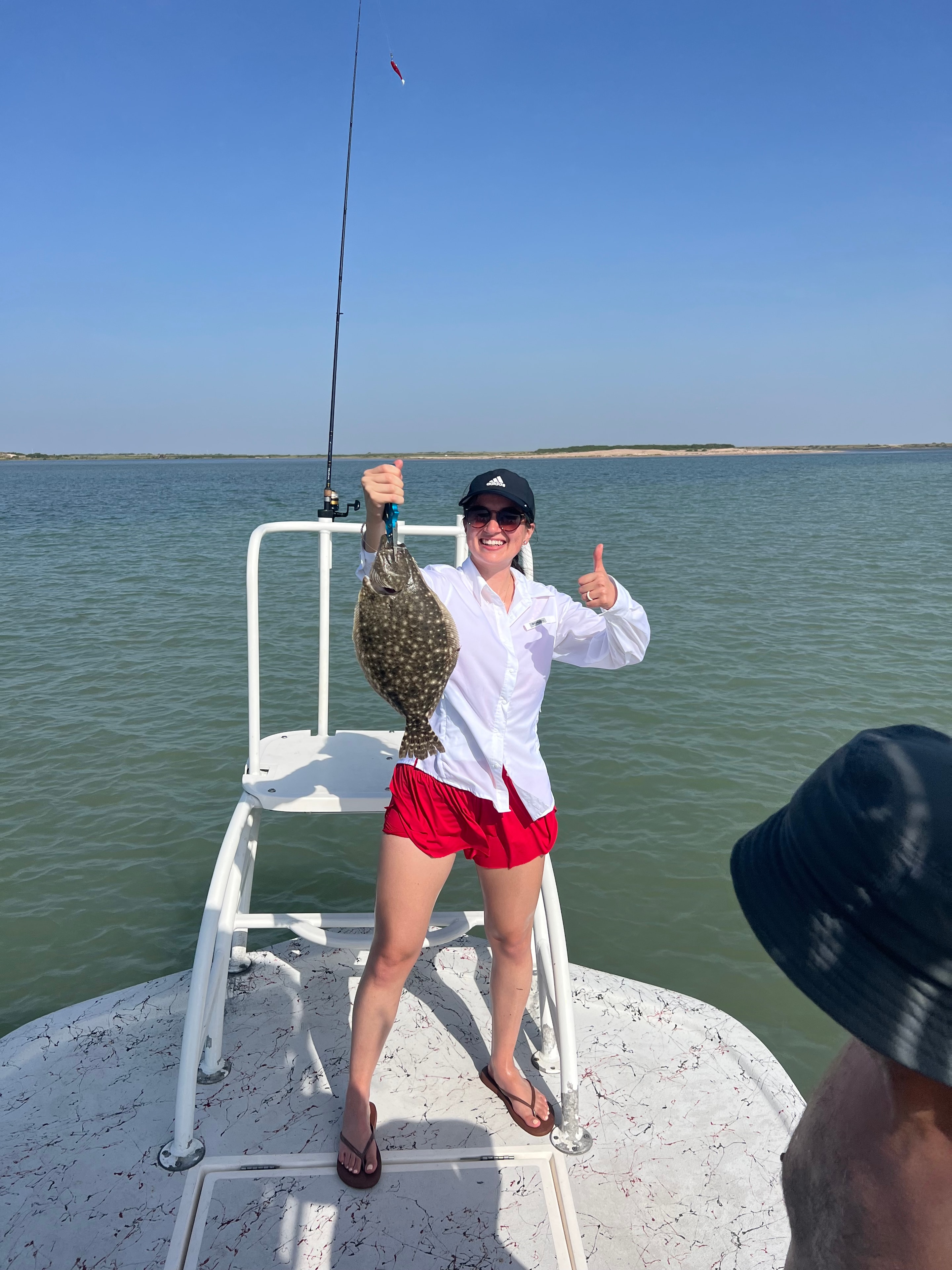
!Flounder caught on a South Padre Island bay charter
*A solid flounder from the Laguna Madre — flat profile, both eyes on top, and that distinctive lateral line. Fall fish like this one are the fattest of the year.*
Where to Find Flounder on the Laguna Madre
Flounder are ambush predators. They bury themselves in sandy or muddy substrate, wait for baitfish or shrimp to pass overhead, and strike from below. That feeding behavior tells you exactly where to look.
Tidal Cuts and Drains
The most productive flounder spots on the Laguna Madre are the small tidal cuts and drains that connect the shallow interior flats to deeper water. As the tide drops, baitfish and shrimp are flushed out of the shallows through these cuts — and flounder position themselves at the mouths to intercept them.
Fish the outgoing tide at these spots. The bite can be fast and furious for 30–45 minutes as the water drains, then slow dramatically once the flow stops.
Channel Edges and Drop-offs
Flounder love the transition between shallow and deep water. On the Laguna Madre, look for the edges where grass flats drop into sandy channels — even a 1–2 foot depth change is enough to hold fish. They sit on the shallow side of the drop, facing into the current, waiting for bait to wash over the edge.
Sandy Pockets in Grass Flats
During the early part of the fall migration (late September through mid-October), flounder are still spread across the flats but tend to hold in sandy pockets surrounded by grass. These are harder to find without local knowledge, but they hold fish that have not yet started moving toward the passes.
Near the Passes
As the migration progresses into November, fish stack up near the Land Cut and the natural passes connecting the Laguna Madre to the Gulf. These areas produce the largest concentrations of flounder in the fall — and some of the biggest fish of the year.
Best Techniques for Fall Flounder
Soft Plastic Baits on a Jig Head
The most versatile and effective flounder technique on the Laguna Madre is a soft plastic paddle tail or shad body on a 1/4 oz jig head. Work it slowly along the bottom with short hops — flounder want the bait right in front of their face, not swimming overhead.
Color matters less than presentation, but chartreuse, white, and natural shad colors all produce. In stained water after a rain, go brighter. In the clear, hypersaline water of the Laguna Madre, natural colors often outperform.
Key tip: Slow down. Most anglers work jigs too fast for flounder. Let the bait sit on the bottom for a beat between hops. Flounder will pick it up off the bottom — you do not need to trigger a reaction strike the way you would with redfish.
Live Mud Minnows and Finger Mullet
If you want to maximize your flounder count, nothing beats live mud minnows (also called bull minnows or mudminnows) on a Carolina rig or a simple split-shot setup. Flounder eat them aggressively, and the live action triggers strikes when soft plastics go ignored.
Rig them through the lips on a 1/0 or 2/0 kahle hook, keep them near the bottom, and let the current do the work. This is the most consistent flounder technique in the fall, especially near tidal cuts.
Live finger mullet are equally effective and easier to find at bait shops in October. Hook them through the back just behind the dorsal fin.
Gulp! Shrimp
Berkley Gulp! Shrimp on a jig head is a legitimate flounder killer on the Laguna Madre — the scent dispersion in the water column does a lot of the work for you. Use a 3-inch Gulp! Shrimp in new penny or natural shrimp color on a 1/4 oz jig head, and work it the same way you would a soft plastic: slow hops along the bottom.
This is a great option when live bait is scarce or when you want to cover more water.
Flounder Gigging (Night Fishing)
Fall is also prime flounder gigging season on the Laguna Madre. Gigging is a traditional South Texas technique where you wade or pole a shallow-draft boat through the shallows at night with a bright light, spotting flounder lying on the bottom and spearing them with a multi-tined gig.
It is highly effective during the fall migration — flounder are shallow, concentrated, and visible under a light. Many South Padre Island anglers consider gigging the most productive way to fill a cooler during the October run.
Note: flounder gigging requires a valid Texas fishing license and is subject to the same size and bag limits as rod-and-reel fishing.
Reading the Tides for Flounder
Tide timing is more important for flounder than almost any other species on the Laguna Madre. Here is the breakdown:
Outgoing Tide — Best Overall
The outgoing tide is the premier flounder tide. As water drains off the flats, baitfish and shrimp are funneled through tidal cuts and channel edges — exactly where flounder are waiting. Position yourself at the mouth of a cut or on the downcurrent side of a drop-off and let the tide deliver the bait to the fish.
The first two hours of the outgoing tide are typically the most productive. Once the flow slows, the bite often dies.
Incoming Tide — Secondary Option
The incoming tide pushes baitfish back onto the flats, and flounder will follow them in. This is a good time to work the edges of grass flats and the sandy pockets just inside the flat margins. The bite is less concentrated than the outgoing, but it can be steady.
Slack Tide — Slow
Slack water — the period between tides when there is little to no current — is generally the slowest time for flounder. They are ambush predators that rely on current to deliver food. Without current, they tend to go inactive. Use slack tide to move and reposition rather than fish hard.
Moon Phase
A strong tidal exchange — which happens around new and full moons — produces the best flounder fishing. The stronger the current through the cuts and channels, the more baitfish are flushed through, and the more aggressively flounder feed. Plan your October and November trips around the new and full moon phases for the best results.
Tackle and Gear Recommendations
You do not need heavy gear for Laguna Madre flounder. Here is what works:
- **Rod:** 7-foot medium-light spinning rod with a fast tip
- **Reel:** 2500–3000 size spinning reel
- **Line:** 10–15 lb braided line with a 12–15 lb fluorocarbon leader (6–8 feet)
- **Hooks:** 1/0–2/0 kahle hooks for live bait; 1/4 oz jig heads for soft plastics
- **Leader:** Fluorocarbon is important in the clear Laguna Madre water — flounder are not line-shy, but the visibility of the water means lighter, clearer leaders produce more bites
The fluorocarbon leader is especially important in October when the water is at its clearest. Flounder are not as spooky as redfish, but they will pass on a bait with a heavy monofilament leader in gin-clear water.
Texas Flounder Regulations
As of the 2026 season, Texas Parks and Wildlife regulations for southern flounder in the Laguna Madre and Gulf of Mexico:
- **Minimum size:** 14 inches (total length)
- **Daily bag limit:** 5 fish per person
- **Season:** Open year-round in the Laguna Madre (check TPWD for any temporary closures)
Always check the current Texas Parks and Wildlife regulations before your trip — flounder regulations have been subject to change in recent years as TPWD manages the population.
When fishing with Captain Kevin on a licensed charter, your Texas fishing license is covered under his Texas Registered Guide license. You do not need to purchase a separate state license.
What to Expect on a Fall Flounder Charter
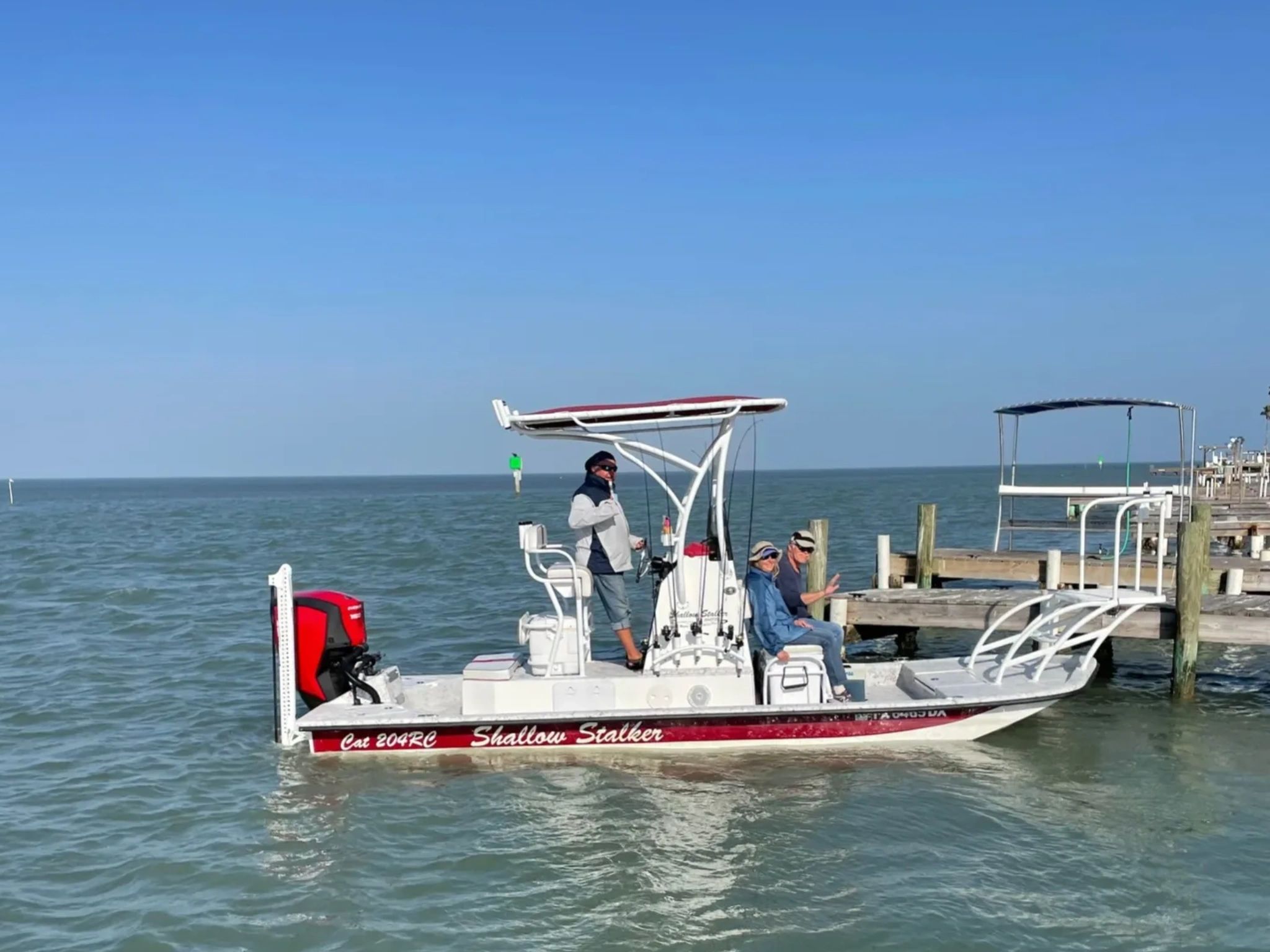
A fall flounder charter with Big Mother Bay Fishing is a 6-hour private trip on the Laguna Madre. We target flounder specifically during October and November, working the tidal cuts, channel edges, and migration staging areas that produce the most fish this time of year.
Flounder charters are ideal for anglers who want to fill a cooler — these fish are excellent table fare, and a good fall day can produce limits for a group of four. We also frequently pick up redfish and speckled trout as bycatch while flounder fishing, since all three species share similar habitat in the fall.
Everything is included: all fishing tackle, bait (live mud minnows when available, soft plastics, and Gulp! shrimp), and bottled water. Fillet service is available at the end of the trip.
Book a fall flounder charter — call or text Captain Kevin at 956-433-7287
Frequently Asked Questions
When exactly is the best time to catch flounder at South Padre Island?
Mid-October through mid-November is the peak window. The migration accelerates once water temperatures drop below 68–70°F, which typically happens in the second or third week of October. Halloween week is often the single best week of the year for flounder on the Laguna Madre.
Are flounder good to eat?
Flounder are widely considered one of the best-eating fish in the Gulf. The meat is white, mild, and firm — excellent fried, baked, or stuffed. A limit of flounder from the Laguna Madre will feed a family well.
Can I catch flounder on a regular fishing charter, or do I need a dedicated flounder trip?
You can absolutely catch flounder on a standard 6-hour bay charter during October and November. Captain Kevin targets flounder specifically during the fall season, and the same areas that hold flounder also hold redfish and speckled trout — so you are likely to catch multiple species on the same trip.
Do I need a Texas fishing license for a charter trip?
No. Captain Kevin's Texas Registered Guide license covers all guests on the charter. You do not need to purchase a separate state license.
What is the bag limit for flounder in Texas?
The current Texas bag limit for southern flounder is 5 fish per person per day, with a 14-inch minimum size. Always verify current regulations at tpwd.texas.gov before your trip.
Ready to book your South Padre Island charter?
Spots fill fast — especially on weekends and holidays. Secure your date with Captain Kevin today.
Licensed USCG Captain · Private Bay Charters · South Padre Island, TX