January Speckled Trout Fishing South Padre Island — Cold-Water Tactics for Trophy Fish
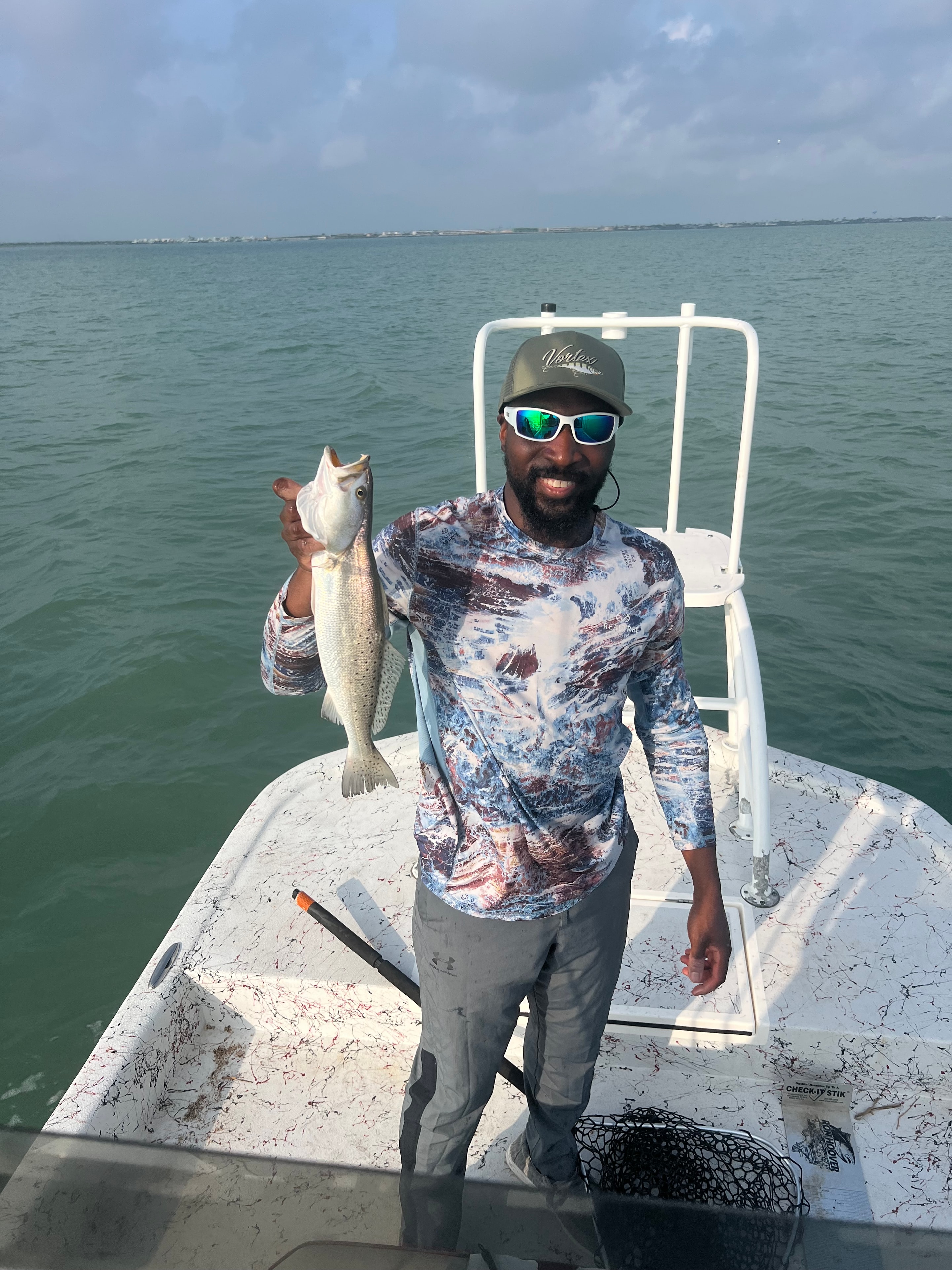
January is the month that separates serious trout anglers from casual ones.
The fish are there. The Lower Laguna Madre holds speckled trout year-round, and January concentrates them into specific, predictable locations. But cold water changes everything about how these fish behave, where they hold, and what it takes to get them to bite. The anglers who understand January trout patterns consistently catch the largest fish of the year. The ones who fish January the same way they fish October go home empty-handed.
This is the complete guide to January speckled trout fishing on South Padre Island — water temperatures, locations, techniques, and the cold-front timing that makes the difference between a great trip and a frustrating one.
Why January Produces Trophy Trout
Speckled trout are cold-water fish. Unlike redfish, which become sluggish and inactive in very cold water, speckled trout remain catchable through the coldest months — they just require a different approach.
January trout on the Laguna Madre have been feeding hard since October. Four months of aggressive fall feeding means these fish are at their maximum size and condition. The fish you catch in January are larger, on average, than the fish you catch in any other month. A 5-pound speckled trout — a genuine trophy by any standard — is a realistic January target on the Lower Laguna Madre.
The other factor is concentration. Summer trout are spread across miles of open flats. January trout are stacked in specific deep holes, channel edges, and protected areas. Once you find them, you can fish the same location for hours and continue catching fish. The challenge is finding them — and that is what this guide is for.
Water Temperature and Trout Behavior in January
Water temperatures in the Laguna Madre typically range from 52°F to 62°F in January. Understanding what happens at each temperature threshold is essential for consistent January trout fishing.
60–65°F — Active and aggressive. This is the upper end of the January range, typically found during warm spells between fronts. Trout are mobile and willing to chase. They move out of the deepest holes and onto adjacent grass flats to feed. This is the best January trout fishing — fish are catchable on a variety of presentations and are actively hunting baitfish.
55–60°F — Selective and deep. The most common January temperature range after a front or two. Trout are still feeding but have moved to deeper water — 4 to 8 feet — and are less willing to chase. Presentations need to slow down significantly. Slow-sink lures, live shrimp, and bottom-dragged soft plastics outperform faster reaction lures. The bite is real but requires patience.
50–55°F — Deep holes only. After a strong January cold front, water temperatures can drop into this range. Trout stack in the deepest available water — 6 to 10 feet — and become nearly inactive. They will still bite, but only on the slowest possible presentations worked directly through the school. Live shrimp on a Carolina rig or a slow-sink lure worked at a crawl are the only reliable options.
Below 50°F — Wait it out. Temperatures below 50°F produce a genuine cold stun event. Trout become completely inactive and may even float near the surface in extreme cases. This is not a fishing situation — it is a waiting situation. Give it 48–72 hours after the front passes and temperatures begin recovering.
The warming window. Regardless of the base temperature, January trout fishing is defined by the daily warming cycle. Cold mornings mean inactive fish. As the sun warms the water through mid-morning, fish become active and move shallower. The best January trout bite typically happens between 10 AM and 2 PM — the opposite of summer fishing, where you want to be on the water at first light.
6 Best Locations for January Speckled Trout
1. Deep Grass Flat Edges — 4 to 6 Feet
The transition zone between shallow grass flats (2–3 feet) and deeper open water (5–7 feet) is the most productive January trout location on the Laguna Madre. Trout hold in the deeper water for thermal stability and move up onto the grass edge to feed during the warming window.
Look for grass flat edges with a defined drop — even a 1-foot depth change is significant in January. The fish position themselves just below the drop and intercept baitfish moving between the flat and the deeper water. Fish the edge with a slow-sink lure or soft plastic, working parallel to the depth change rather than across it.
Best time: 10 AM to 2 PM when the sun has warmed the shallow flat and fish are moving up to feed.
2. Deep Channel Edges — 6 to 10 Feet
The channels that cut through the Laguna Madre — both natural and dredged — are the primary January trout refuge after cold fronts. Fish stack in these channels when temperatures drop and remain there until conditions improve.
Channel edge fishing in January requires a different mindset than flat fishing. You are not sight fishing — you are fishing blind to stacked fish. Work the channel edges methodically with a slow-sink lure or live shrimp, covering the water systematically until you find the school. Once you locate fish, anchor or hold position and work the area thoroughly.
Key locations: The Intracoastal Waterway channel edges, the natural channels that cut through the south Laguna Madre, and the deeper cuts adjacent to the major grass flat systems.
3. Protected Coves with Dark Bottom
Coves with dark mud bottom on the south-facing shorelines of the Laguna Madre are January trout magnets. The dark bottom absorbs solar heat, the cove provides wind protection, and the combination creates water that is measurably warmer than surrounding areas.
January trout in these coves are often visible — look for subtle surface disturbances, nervous water, or the occasional swirl of a feeding fish. The fish are not as actively tailing as redfish, but they are present and catchable. Slow presentations with live shrimp or soft plastics in natural colors work best in these protected areas.
4. Oyster Reef Edges — Structure and Baitfish
Oyster reefs are year-round fish magnets, but they are particularly important in January. The structure holds baitfish — mullet, pinfish, and shrimp — and the predators follow. January trout hold on the deep side of oyster reefs, using the structure as a windbreak and ambush point.
Fish the deep edge of the reef with a slow-sink lure worked along the bottom. The strikes are often subtle in cold water — a slight tick or change in weight rather than the aggressive thump of a warm-water bite. Use a light rod with a sensitive tip to detect these subtle takes.
5. Warm Water Outflows and Drains
Any area where slightly warmer water enters the bay becomes a January trout concentration point. Drainage channels, shallow coves that warm quickly in the sun, and areas near any warm water source attract fish during cold spells.
These locations are particularly valuable in the 24–48 hours after a cold front, when fish are recovering from the temperature drop and seeking the warmest available water. Even a 2–3°F temperature difference is enough to concentrate fish.
6. The Land Cut — Protected Deep Water
The Land Cut — the section of the Intracoastal Waterway that cuts through the southern Laguna Madre — is one of the most reliable January trout locations on the entire Texas coast. The channel provides deep, protected water, and the adjacent flats warm quickly in the winter sun.
January Land Cut fishing is primarily a channel-edge game. Fish hold in 6–10 feet of water along the channel edges and move up onto the adjacent flats during the warming window. The combination of deep refuge water and accessible feeding flats makes this area consistently productive throughout January.
5 Cold-Water Techniques That Catch January Trout
1. Slow-Sink Lures — The January Standard
Slow-sink lures (MirrOlure 52M, Corky, Paul Brown Lure) are the most effective January trout technique on the Laguna Madre. These lures sink slowly through the water column, staying in the strike zone longer than faster-sinking jigs, and their subtle action triggers strikes from cold, selective fish.
The retrieve is critical: cast, let the lure sink to the desired depth (count it down — 3 seconds per foot in cold water), then work it with a very slow twitch-and-pause retrieve. The pause should be 5–10 seconds in cold water. Most strikes come during the pause, when the lure is hanging nearly motionless in the water column.
Colors: Bone white, chartreuse, and natural mullet colors are the most consistent January producers. On overcast days, brighter colors (chartreuse, pink) can outperform natural patterns.
2. Live Shrimp on a Carolina Rig
When the bite is tough — after a front, in very cold water, or when fish are being extremely selective — live shrimp on a Carolina rig is the most reliable January trout technique. The natural scent and movement of live shrimp is irresistible to cold, slow-moving trout that will not commit to an artificial.
Rig a live shrimp 18–24 inches above a 1/4 oz egg sinker on a 2/0 to 3/0 circle hook. Cast to the target area and allow the rig to settle to the bottom. Work it with a very slow drag — 6 inches at a time — with long pauses between movements. The strike is often a subtle pickup rather than an aggressive hit.
3. Soft Plastics on Light Jig Heads
Soft plastic paddle tails and shrimp imitations on light jig heads (1/8 to 3/16 oz) are effective January trout lures when worked correctly. The key is the same as with slow-sink lures: slow down dramatically compared to warm-weather fishing.
A slow drag along the bottom with 5–10 second pauses is the most effective retrieve. In water below 58°F, the lure should barely be moving — just enough to maintain contact with the bottom and create subtle vibration. The bite is often a slight weight change or the line moving sideways.
Best colors: Chartreuse/white, pink/white, and natural shrimp colors. Avoid dark colors in cold, clear January water.
4. Topwater During the Warming Window
On calm January days when the water has warmed into the upper 50s or low 60s, topwater lures can produce explosive strikes from trout that have moved up onto the grass flats to feed. This window is typically 11 AM to 1 PM — after the water has had time to warm but before the afternoon wind picks up.
Walk-the-dog style topwaters (Spook Jr., She Dog) worked slowly — much slower than summer — are the most effective. The strikes are violent and visual, making this one of the most exciting forms of January fishing available. Do not miss this window on calm, sunny days.
5. Popping Cork with Live Shrimp
A popping cork with live shrimp suspended 18–24 inches below is a highly effective January technique for fishing grass flat edges and channel edges. The cork keeps the shrimp at the right depth, the popping action attracts attention, and the live shrimp closes the deal.
Work the cork with a slow pop-and-pause retrieve, allowing 8–12 seconds between pops in cold water. The extended pause gives slow-moving trout time to locate and commit to the shrimp. Most strikes come during the pause — watch the cork carefully for any movement.
Cold Front Timing for January Trout
January cold fronts are the defining feature of the month. Understanding the front cycle is the most important factor in planning a successful January trout trip.
Pre-front (24–48 hours before): Barometric pressure is dropping, winds are shifting from south to southeast, and temperatures are warming. This is often the best trout fishing of the entire front cycle. Fish are feeding aggressively ahead of the pressure change, and the warming trend has pushed them onto the grass flats. Fish the flat edges and grass beds with confidence.
During the front: North winds, dropping temperatures, and rough water. Trout move to deep channels and become inactive. Move to protected channel edges and fish slowly with live shrimp. Fishing is difficult but not impossible in protected areas.
Post-front day 1: The hardest day to fish. Water is cold, dirty, and fish are stacked in deep channels. Live shrimp on a Carolina rig in the deepest available water is the only reliable option. Manage expectations.
Post-front day 2: The recovery begins. Water is clearing, temperatures are rising, and fish are starting to move. Fish the channel edges and the edges of protected coves. Slow-sink lures and live shrimp both work.
Post-front day 3–4: The prime window. Fish have recovered from the front, they are hungry, and they are moving back onto the grass flats. Clear water, warming temperatures, and actively feeding trout. This is the best January trout fishing of the entire front cycle — often better than the pre-front bite.
Timing your trip: Check the 10-day forecast before booking. January fronts move through on a roughly 7–10 day cycle. If you can time your trip to arrive 2–3 days after a front passes, you will fish the prime recovery window.
What to Wear for January Trout Fishing
January mornings on the Laguna Madre require serious cold-weather preparation. The wind chill on a 30 mph boat ride at 45°F is genuinely dangerous without proper clothing.
Base layer: Moisture-wicking thermal underwear — top and bottom. This is not optional in January.
Mid layer: A fleece or insulating jacket. You will likely keep this on all morning and shed it by early afternoon on warm days.
Outer layer: A windproof, waterproof shell is essential. The spray from the boat ride and the wind chill make a good outer shell the most important piece of clothing you bring.
Hands: Lightweight fishing gloves or liner gloves. Cold hands make detecting subtle bites nearly impossible.
Head: A beanie or warm hat for the morning. The sun will warm things up by mid-morning, but the first hour on the water in January can be genuinely cold.
Sun protection: Even in January, South Texas sun is intense. Polarized sunglasses are essential — the low winter sun angle actually improves sight fishing visibility, but it also means more direct exposure.
Captain Kevin provides all rods, reels, tackle, bait, and equipment. You bring cold-weather clothing, sun protection, water, and snacks.
Booking a January Trout Charter
January is one of Captain Kevin's favorite months to run trout charters. The fish are large, the water is clear, and the concentrated winter patterns make for efficient, productive fishing once you find the school.
Winter Texan season means more anglers on the island than most people expect — January dates fill faster than most people realize. Book 2–3 weeks in advance.
Charter pricing: $550 for 2 people, $100 per additional angler, maximum 4 guests. 6-hour trip. All equipment provided. $100 non-refundable deposit to hold your date.
Contact Captain Kevin to book your January trout charter or call directly at (956) 433-7287 to ask about current conditions and availability.
Frequently Asked Questions
Is January a good month for speckled trout at South Padre Island? Yes — January produces the largest speckled trout of the year on the Lower Laguna Madre. Cold water concentrates fish in predictable locations, and four months of fall feeding means these fish are at their maximum size and condition. The key is understanding cold-water patterns and timing your fishing around the daily warming window.
What water temperature is best for January trout fishing? The 60–65°F range produces the most active feeding. Fish are still catchable down to 55°F with slower presentations. Below 55°F, fish stack in deep channels and require very slow presentations with live shrimp. Below 50°F, wait for the recovery.
What is the best lure for January speckled trout? Slow-sink lures (MirrOlure 52M, Corky, Paul Brown) are the most effective January trout lures. Live shrimp on a Carolina rig is the most reliable option when the bite is tough after a cold front. Soft plastics on light jig heads worked very slowly are also effective.
What time of day is best for January trout fishing? Unlike summer fishing, January is not an early-morning game. The best bite typically happens between 10 AM and 2 PM as the sun warms the water and fish become active. Plan to be on the water by 8–9 AM and fish through early afternoon.
How do cold fronts affect January trout fishing? Cold fronts push trout into deep channels and make them inactive for 24–48 hours. The best fishing happens 2–3 days after a front passes, during the recovery window when fish are hungry and moving back onto the flats. Timing your trip around the front cycle is the most important factor in January trout fishing success.
What size trout can I expect in January at South Padre Island? January produces the largest trout of the year. Fish in the 18–22 inch range are common, and genuine trophy fish — 24 inches and above — are caught regularly. A 5-pound speckled trout is a realistic January target on the Lower Laguna Madre.
Book Your January Trophy Trout Charter Today
January produces the largest speckled trout of the year — and Winter Texan season means dates go fast. Secure your spot on the Shallow Stalker before Captain Kevin's calendar fills up.
Licensed USCG Captain · Private Bay Charters · South Padre Island, TX
Bringing the family? See the family fishing charter