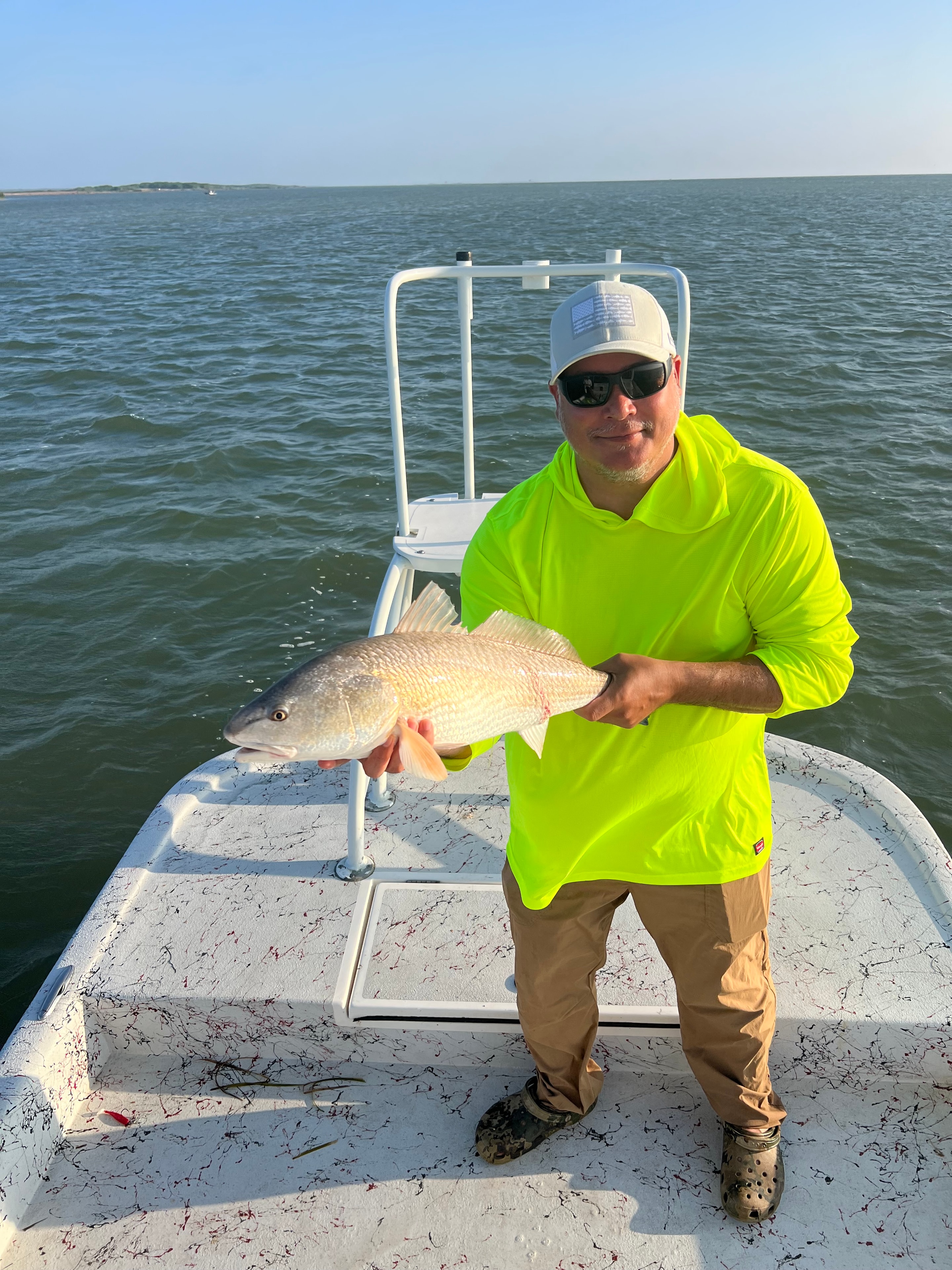
South Padre Island Fishing Report — November 2026

November is the month the Laguna Madre delivers its best performance of the year. The flounder migration — building since mid-October — hits its peak in the first two weeks of November. Redfish are schooled on the shallow flats in numbers you rarely see any other time of year. Speckled trout are feeding hard ahead of every cold front. And black drum are moving into the bay in force as water temperatures drop into the mid-to-upper 60s.
If you fish South Padre Island once a year, November is the month to do it.
Current Conditions — November 2026
Water temperature: 66–72°F in the main bay, dropping into the low 60s in the channels and passes after cold fronts. This is the sweet spot for flounder migration — the fish need water temperatures below 68–70°F to trigger the offshore spawning run, and we are right in that window.
Water clarity: Excellent. The bay is running clear to lightly stained with good visibility on the shallow flats. Sight fishing conditions on calm mornings are outstanding — polarized sunglasses are essential.
Wind: November brings the most active cold front cycle of the year. Expect a front every 7–10 days, with north winds 20–30 mph during and after each passage. The post-front recovery windows — typically 2–3 days after each front — are producing the best fishing of the season. The pre-front feeding window in the 24–36 hours before each front is equally productive, especially for speckled trout.
Tides: The fall tidal pattern is fully established. South winds push water onto the flats and activate the shallow bite. North winds blow water out and concentrate fish in channels, passes, and deeper pockets. The outgoing tide through the passes is the most productive window for flounder right now.
Flounder — The Migration Is at Its Peak
The flounder migration is the defining event of fall on the Texas coast, and it is running hard right now. Flounder that spent the summer scattered across the Laguna Madre are staging at the passes — Brazos Santiago Pass and the Land Cut — in preparation for their offshore spawning run. The concentration of fish in these areas right now is exceptional.
Where they are: The channel edges and current breaks adjacent to Brazos Santiago Pass are holding the highest concentrations of fish. The cuts and drains that feed into the main pass are also producing well. Fish are stacked in 4–8 feet of water along the bottom, waiting for the outgoing tide to carry them offshore.
How to catch them: Live finger mullet on a Carolina rig is the most consistent producer right now. A 1/4 oz jig head with a Gulp! shrimp in new penny or chartreuse is a close second. Work the bait slowly along the bottom — flounder are ambush predators and they want the bait presented right in front of them. The outgoing tide window is the most productive; fish the last two hours of the outgoing and the first hour of the incoming for the best action.
How long the window lasts: The peak migration typically runs from late October through mid-November. By Thanksgiving, most flounder have pushed offshore to spawn and the numbers in the passes drop significantly. The window is open right now — if flounder is on your list, do not wait.
Best flounder tactics this week: Live finger mullet on a Carolina rig in 4–8 feet of water along channel edges. Gulp! shrimp on a 1/4 oz jig head. Fish the outgoing tide in the passes. Early morning and late afternoon are the most productive windows. Slow down your presentation — flounder are not chasing bait in cold water.
Redfish — Schools on the Flats and Channel Edges
The redfish bite remains outstanding in November. The shallow flat schools that were so productive in October are still present on calm days between fronts, and the post-front channel bite is producing consistent action.
Shallow flat schools: On calm, sunny mornings between fronts, redfish are still schooling on the shallow grass flats in 1–3 feet of water. These schools are visible — look for wakes, tails, and nervous water on the surface. A gold spoon, soft plastic crab imitation, or topwater lure presented quietly ahead of a moving school is producing explosive strikes. This bite is weather-dependent in November — you need calm conditions and sun to see the fish.
Post-front channel bite: After each cold front, redfish move off the flats and stack along channel edges, oyster reefs, and deeper pockets in 4–8 feet of water. A live shrimp under a popping cork or a soft plastic on a jig head worked along the bottom is the most consistent approach in these conditions. The post-front bite can be outstanding — fish are concentrated and feeding aggressively once the water settles.
Bull reds: Oversized bull redfish — fish in the 28–40 inch range — are mixed into the schools on the flats and stacked along the deeper channel edges. These fish are catch-and-release only under Texas regulations (one oversized per person per day), but a 35-inch bull red on light tackle in two feet of water is a fight you will not forget.
Best redfish tactics this week: Gold spoon or soft plastic crab on the shallow flats on calm mornings. Live shrimp under a popping cork along channel edges post-front. Soft plastics — Paddle Tail Shad in root beer/chartreuse or new penny — on a 1/4 oz jig head in the 4–6 foot zone.
Speckled Trout — Pre-Front Feeding Windows Are Exceptional
Speckled trout are in full fall mode. The fish have moved from the summer deep-grass haunts into the 4–6 foot transition zone, and the pre-front feeding windows are producing some of the most aggressive trout bites of the year.
Pre-front windows: In the 24–36 hours before a cold front arrives, dropping barometric pressure triggers aggressive feeding in speckled trout. This is the most reliable trout bite of the fall season. If you can time your trip to the pre-front window, the trout fishing right now is exceptional — fish in the 16–24 inch range are feeding hard on soft plastics and live shrimp.
Post-front recovery: After each front passes, the trout bite slows for 24–48 hours as fish adjust to the new water temperature. Once the bay settles — typically 2–3 days post-front — the trout bite comes back strong, often better than before the front.
Topwater: The topwater bite is winding down in November as water temperatures drop, but early morning surface action on calm days is still producing fish. A She Dog or She Pup worked slowly at first light can still draw aggressive strikes from trout in the 18–22 inch range. As the morning progresses, transition to soft plastics in the 4–6 foot zone.
Best trout tactics this week: Soft plastics — Paddle Tail Shad in root beer/chartreuse or new penny — on a 1/4 oz jig head in the 4–6 foot zone. Live shrimp under a popping cork for consistent action throughout the day. MirrOlure She Dog topwater at first light on calm mornings. Time your trip to the pre-front window for the most aggressive bite.
Black Drum — Moving Into the Bay in Numbers
Black drum are arriving in force this month. These fish — which can reach 20–50 pounds — move into the Laguna Madre in November as water temperatures drop, staging on oyster reefs, hard bottom, and channel edges throughout the bay.
Where they are: Oyster reefs and hard bottom areas in 4–8 feet of water are holding the most fish right now. The channel edges adjacent to the reefs are also productive. Black drum are bottom feeders — they are working the reefs for crabs, shrimp, and small mollusks.
How to catch them: A live or fresh-dead shrimp on a Carolina rig or knocker rig fished on the bottom near oyster structure is the most consistent producer. Soft plastic crab imitations on a 1/4 oz jig head worked slowly along the bottom are also effective. Black drum are not fast-moving fish — slow down your presentation and let the bait sit.
Size: November black drum run 5–25 pounds on average, with some fish in the 30–40 pound range mixed in. These are powerful fish on light tackle — a 20-pound drum on a medium spinning rod is a serious workout.
Recent Catch Highlights
The last two weeks on the water have been exceptional. Here is a snapshot of what clients have been putting in the cooler:
November 1–2: Back-to-back morning trips in the passes produced flounder limits both days. The outgoing tide window was the key — fish were stacked in the channel edges in 5–7 feet of water. Live finger mullet accounted for most of the fish. One group put 8 flounder, 4 redfish, and 6 trout in the cooler on a single 6-hour trip.
November 5–6: Pre-front window ahead of the front that came through November 7. The trout bite was exceptional — fish feeding aggressively in the 4–5 foot zone on soft plastics. Multiple fish in the 20–23 inch range. Redfish schools visible on the flats both mornings. One client landed a 34-inch bull red on a gold spoon in 18 inches of water.
November 8–10: Post-front recovery window. The front blew hard for two days, then the bay went flat and clear. Recovery bite was outstanding — flounder back in the passes, redfish stacked on the channel edges, and black drum showing up on the oyster reefs for the first time this fall. One group put flounder, redfish, trout, and black drum in the cooler on a single trip — a true November slam.
What to Expect the Rest of November
The pattern I am seeing right now should hold and improve through mid-November. The cold front cycle will continue — expect fronts around November 12–14 and again around November 20–22. Each front will be followed by a 2–3 day recovery window that produces excellent fishing.
The flounder migration will begin to taper after mid-November as most fish push offshore to spawn. By Thanksgiving, the pass bite will slow significantly. If flounder is your primary target, the window is the next two weeks — do not wait.
Redfish will remain active through the end of the month. The shallow flat schools will be present on calm days between fronts, and the channel bite will be consistent post-front. Speckled trout will continue to feed hard in the pre-front windows. Black drum will increase in numbers through the end of November as more fish move into the bay.
November booking note: I have limited availability remaining in November. The first two weeks of November and Thanksgiving week are the most popular dates of the year. If you want to fish the peak of the flounder migration and the best multi-species bite on the Laguna Madre, contact me now — these dates fill fast.
Gear and Conditions Notes
What to wear: November mornings are cool — mid-50s to low 60s at launch time. A thermal base layer, fleece mid-layer, and windproof outer shell will keep you comfortable. Afternoons warm into the 60s and 70s on calm days between fronts. Dress in layers you can peel off as the day warms. Polarized sunglasses are essential for sight fishing on the flats.
Tides this week: The best fishing windows are lining up with the outgoing tide in the passes for flounder and the incoming tide on the flats for redfish. I adjust trip timing based on the tide and wind forecast for your specific date.
Bait availability: Live shrimp and finger mullet are both available at local bait shops right now. I provide all tackle, bait, and fishing license coverage on every charter — you do not need to bring anything except food, drinks, and sunscreen.
Book Your November Charter
November is the best month to fish South Padre Island. The flounder migration is at its peak, redfish are schooled and aggressive, speckled trout are feeding hard, and black drum are moving into the bay. The combination of species variety, fish size, and comfortable weather creates a multi-species bite that is hard to match at any other time of year.
I have limited availability remaining in November. If you want to fish the peak of the fall season on the Laguna Madre, contact me now to check dates.
Previous report: October 2026 fishing report — flounder migration building, redfish on the flats
Next report: December 2026 fishing report — winter trout, bull reds, and black drum
Planning your trip from the Rio Grande Valley? See the McAllen fishing charter guide or the Harlingen fishing charter guide for drive times, directions, and what to expect on a November charter.
Driving from Central or South Texas? The San Antonio fishing charter guide and Austin fishing charter guide cover everything you need to plan a fall flounder road trip to South Padre Island.
Ready to book your South Padre Island charter?
Spots fill fast — especially on weekends and holidays. Secure your date with Captain Kevin today.
Licensed USCG Captain · Private Bay Charters · South Padre Island, TX