Speckled Trout Fishing in the Laguna Madre — South Padre Island Guide
Ask any angler who has fished the Texas coast what their favorite species is, and a significant number will say speckled trout — also called spotted seatrout. They are beautiful fish, they fight hard on light tackle, and they are excellent table fare. On the Laguna Madre at South Padre Island, they are also abundant.
I have been guiding charters on this bay for years, and speckled trout are consistently one of the top requests I get. Families love them because they are willing biters. Experienced anglers love them because a big trout — a "gator trout" pushing 25 inches or more — is a legitimate trophy fish. Here is everything you need to know to catch them.
Why the Laguna Madre Produces Exceptional Speckled Trout
The Lower Laguna Madre is one of the most productive shallow-water fisheries on the entire Gulf Coast, and speckled trout are a big reason why. The bay system offers everything trout need: extensive seagrass beds, clear water, abundant baitfish, and a climate that keeps fish active year-round.
The Laguna Madre is also hypersaline — saltier than the open Gulf — which supports a dense population of shrimp, mullet, and other forage species. Where the bait is, the trout are. It is that simple.
What makes South Padre Island particularly good is access. The Lower Laguna Madre is a relatively short run from the launch, and the productive grass flats are spread across a large area. You are not competing with a hundred other boats for the same stretch of water.
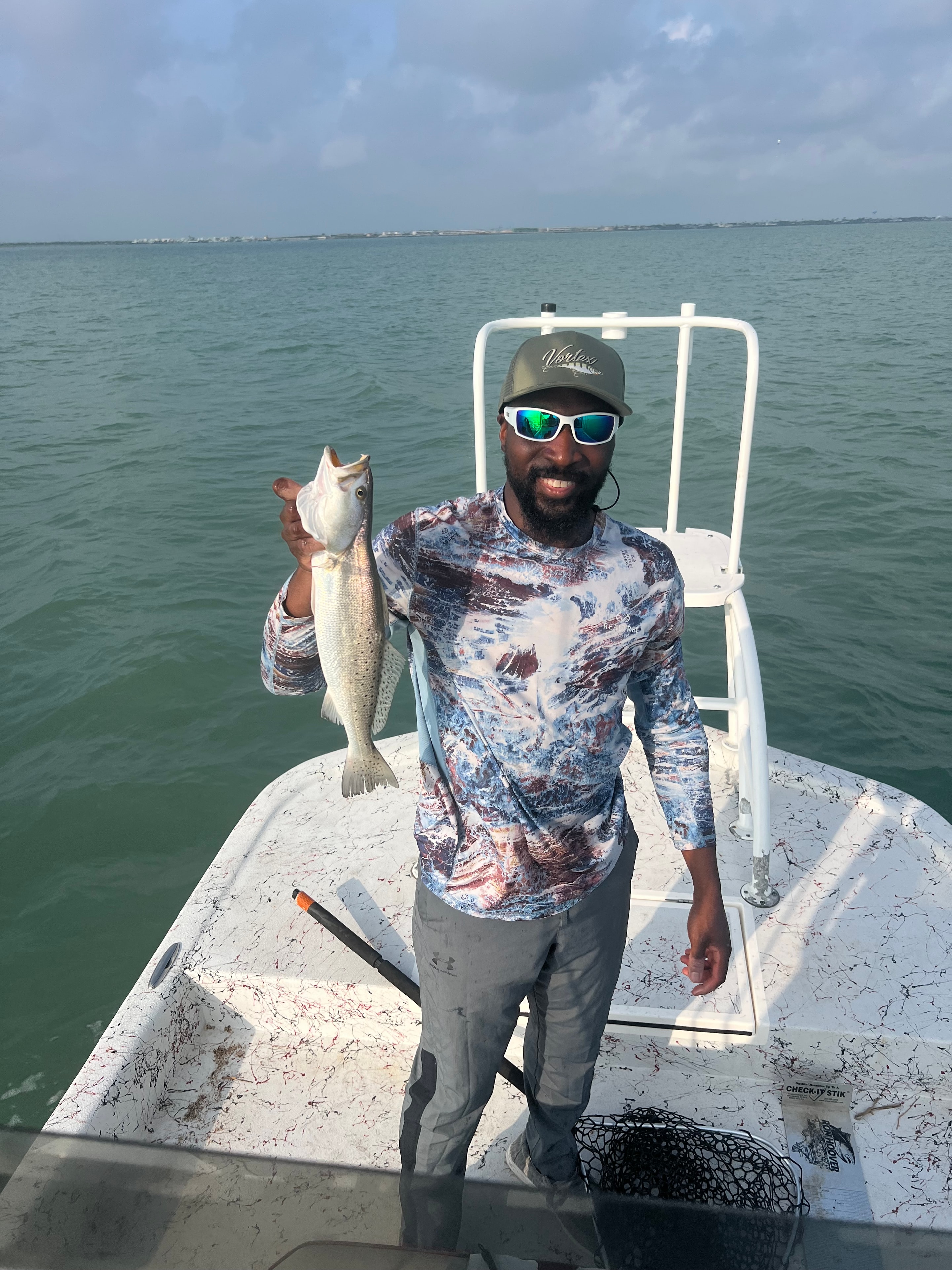
!Speckled trout caught on South Padre Island bay charter
*A solid speckled trout from the Laguna Madre flats — the distinctive black spots and golden flanks are unmistakable.*
Seasonal Patterns: When to Target Speckled Trout
Spring (March–May)
Spring is prime time for speckled trout on the Laguna Madre. As water temperatures climb from the mid-60s into the low 70s, trout move aggressively onto the grass flats to feed. Baitfish are staging in the shallows, and trout follow them in.
March and April can produce some of the best topwater action of the year. Early morning, when the water is calm and the surface is glassy, trout will blow up on topwater plugs in 1–3 feet of water over grass. It is one of the most exciting ways to fish the Laguna Madre.
Summer (June–August)
Summer trout fishing requires adjusting your schedule. The heat pushes fish to feed in low-light conditions — early morning and the last hour before dark are your windows. Midday, trout retreat to slightly deeper water and become lethargic.
The key in summer is being on the water at first light. We often launch before sunrise to be positioned on the fish when they are actively feeding. Summer trout on the Laguna Madre tend to run smaller on average, but the numbers can be excellent if you hit the right conditions.
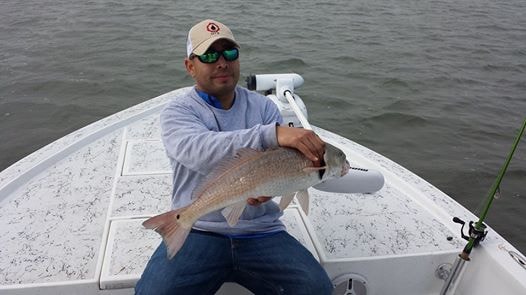
!Angler with speckled trout on South Padre Island fishing charter
*Early morning trout fishing on the Laguna Madre — the calm water and low light are exactly what summer trout want.*
Fall (September–November)
Fall is arguably the best season for speckled trout on South Padre Island. Cooling water temperatures trigger aggressive feeding as fish prepare for winter. Trout are stacked on the flats, baitfish are everywhere, and the fish are willing to eat almost anything you put in front of them.
October and November are particularly productive. The crowds thin out after Labor Day, the weather stabilizes, and the trout fishing can be exceptional. This is when the biggest fish of the year are often caught — gator trout pushing 5–7 pounds are a real possibility on the fall Laguna Madre.
Winter (December–February)
Winter trout fishing on the Laguna Madre is underrated by anglers who have not experienced it. Speckled trout are cold-sensitive compared to redfish, so they do move to deeper water when temperatures drop. But on stable, mild winter days — and South Padre Island has plenty of those — trout push back up onto the flats and feed actively.
The biggest trout of the year are often caught in winter. Cold water slows their metabolism, but it also concentrates them in predictable locations. Find the right depth and structure on a warm winter afternoon, and you can have a memorable day.
Where to Find Speckled Trout on the Laguna Madre
Grass flats in 2–4 feet of water — Seagrass beds are the primary habitat for speckled trout in the Laguna Madre. They hold the shrimp and small baitfish that trout feed on. Look for areas where the grass transitions from thick to sparse — trout often hold on these edges.
Tidal cuts and passes — Moving water concentrates baitfish, and trout position themselves to ambush them. The mouths of tidal cuts and any channel that drains a flat are worth fishing on a moving tide.
Shell pads and oyster reefs — Hard structure holds baitfish and provides ambush points. Some of the largest trout I have caught came from working the edges of oyster reefs with a slow-sinking lure.
Deeper grass edges in summer and winter — When temperatures push trout out of the shallows, they stack along the deeper edges of grass beds, typically in 4–6 feet of water. A slow-sinking soft plastic worked along the bottom is deadly in these conditions.
Shoreline pockets and coves — Trout push into protected pockets to feed, especially early morning. These areas warm faster than open water, which concentrates baitfish and the trout that follow them.
!Fisherman with speckled trout catch on Laguna Madre
*Working the grass flats — this is the habitat that makes the Laguna Madre one of the best speckled trout fisheries on the Texas coast.*
Tackle for Laguna Madre Speckled Trout
Speckled trout are not tackle-shy, but using the right gear makes a difference in presentation and feel.
Rod and reel: A 7-foot medium-light to medium spinning rod with a 2500 series reel is ideal for Laguna Madre trout. Spool with 10–15 lb braided line and a 15–20 lb fluorocarbon leader. The lighter braid gives you better feel and longer casts on the flats.
Live shrimp: Live shrimp is the most consistent trout bait in the Laguna Madre, period. Fish them under a popping cork in 2–4 feet of water, or free-line them on a light jig head and let them drift naturally. Trout cannot resist a lively shrimp.
Soft plastics: Paddle-tail soft plastics on a 1/8 to 1/4 oz jig head are the go-to artificial for Laguna Madre trout. Work them with a slow, steady retrieve or a lift-and-drop presentation. Colors that consistently produce: chartreuse, white, and natural shrimp patterns.
Topwater plugs: Early morning topwater fishing for speckled trout is one of the great experiences in bay fishing. Walk-the-dog style plugs and chuggers produce explosive surface strikes in calm conditions. Work them slowly with long pauses — trout often hit on the pause.
Gold spoons: A 1/4 oz gold spoon is a classic Texas bay lure that still catches trout. Cast it past the fish, let it flutter down, and retrieve it with a slow, steady pump. Deadly around grass edges and shell pads.
Techniques That Catch Trout
Popping cork with live shrimp — This is the most effective rig for Laguna Madre trout, especially for anglers who are newer to bay fishing. The pop attracts fish from a distance, and the suspended shrimp is irresistible. Pop it twice, pause for 3–5 seconds, and repeat. The strike often comes on the pause.
Slow-sinking soft plastics — In deeper water or when fish are less active, a slow-sinking paddle tail worked along the bottom mimics a wounded shrimp or baitfish. Keep contact with the bottom, vary your retrieve speed, and be ready for subtle strikes.
Topwater at first light — In calm conditions, especially in spring and fall, trout will crush topwater plugs in the shallows. Work them slowly and be patient — the strikes are violent and the fishing is addictive.
Drifting the flats — One of the most effective ways to cover water and find active trout is to drift across a grass flat with the wind, casting ahead of the drift. This lets you cover a lot of water efficiently and locate fish before anchoring or staking out.
Matching the hatch — Pay attention to what baitfish are present. If mullet are schooling, use a mullet-colored lure. If shrimp are abundant, go with a natural shrimp pattern. Trout are opportunistic feeders, but matching the local forage gives you an edge.
!Anglers displaying speckled trout catch on South Padre Island
*A great day on the Laguna Madre — speckled trout are one of the reasons South Padre Island is a world-class bay fishery.*
Regulations and Bag Limits
Texas Parks and Wildlife sets the regulations for speckled trout in the Laguna Madre. As of this writing, the daily bag limit is 5 fish per person, with a minimum size of 15 inches. There is also a slot limit in effect — check the current TPWD regulations before your trip, as these can change.
All fishing licenses are included on a Big Mother Bay Fishing charter. You do not need to worry about paperwork — just show up and fish.
Plan Your Speckled Trout Trip
Speckled trout share the Laguna Madre with redfish, and a mixed bag of both species in a single trip is common. For everything you need to know about targeting reds on the same flats, see the redfish fishing guide for South Padre Island. To pick the right time of year for your trip, the month-by-month South Padre Island fishing calendar breaks down what bites when across every season. And if you want to see what real catches from the Laguna Madre look like, browse the fishing photos gallery.
Book a Speckled Trout Charter with Captain Kevin
The Laguna Madre is one of the finest speckled trout fisheries on the Gulf Coast, and I know this water intimately. Whether you want to sight-fish the flats for gator trout or put a limit of eating-size fish in the cooler, I can put you on the fish.
A private charter is $550 for 2 people, with $100 per additional person up to 4. All fishing gear, bait, and your Texas fishing license are included. A $100 PayPal deposit holds your date (non-refundable except in the case of a dire emergency or weather cancellation).
Call Captain Kevin at 956-433-7287 to check availability and book your trip. Speckled trout season on the Laguna Madre is essentially year-round — there is never a bad time to come.
Tight lines.
Ready to book your trip?
Text Captain Kevin: 956-433-7287