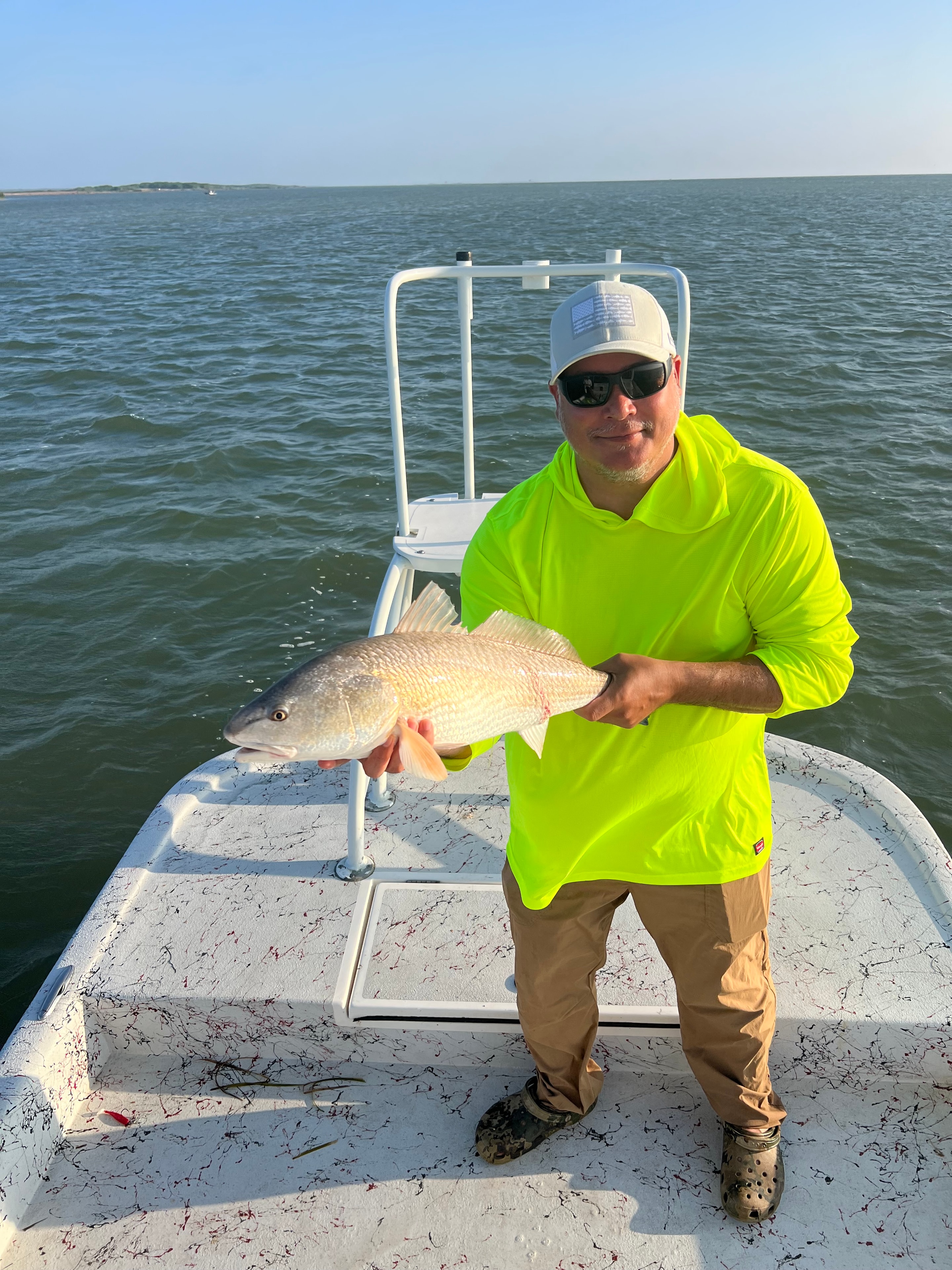
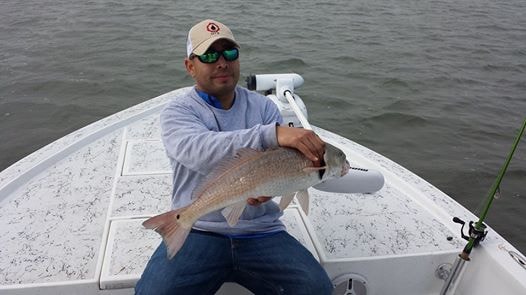
Tidal Fishing on the Lower Laguna Madre — How Moon, Sun, and Current Put Fish in the Boat
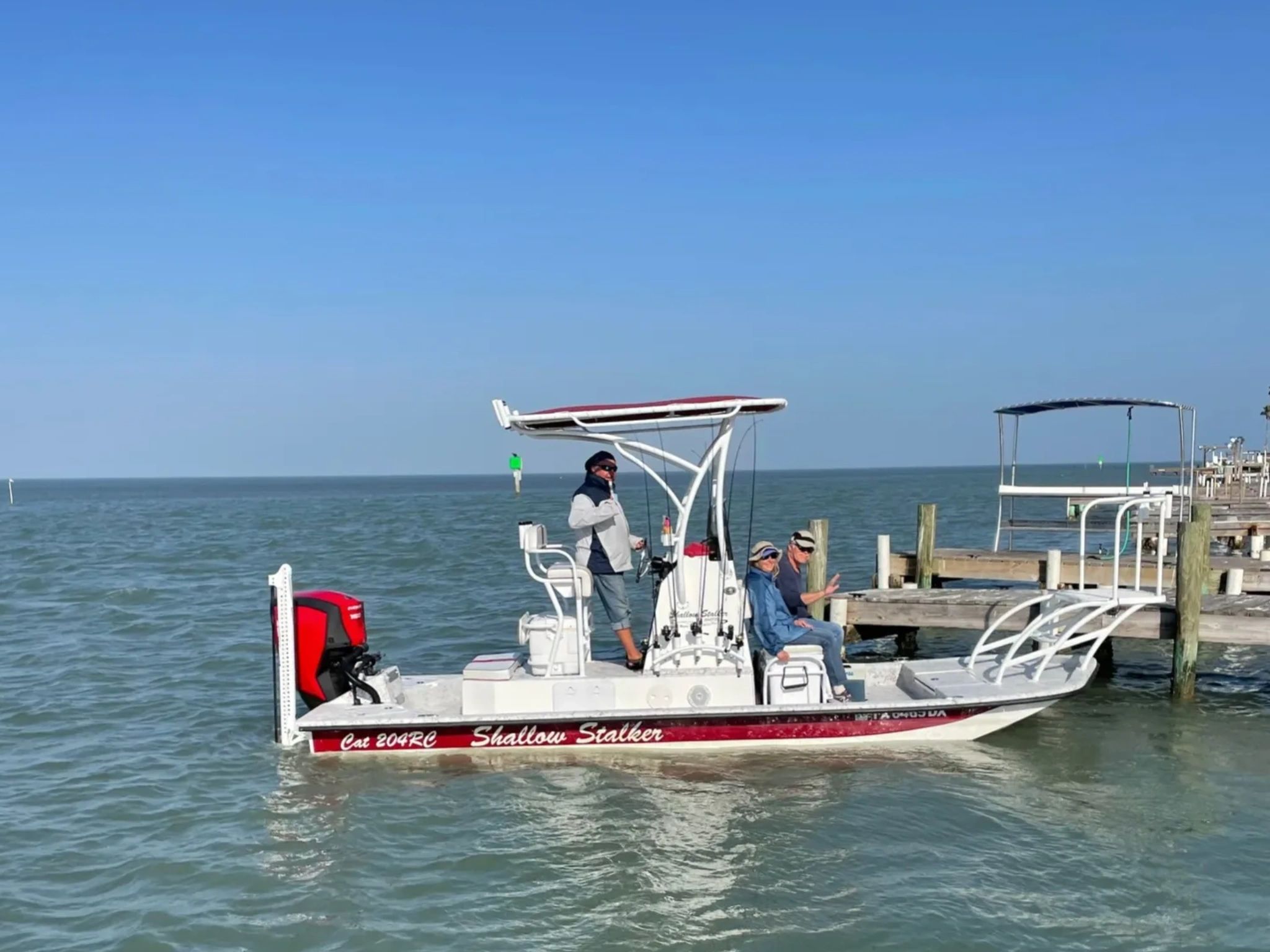
People ask me all the time: "Captain Kevin, what's the best time to fish South Padre Island?" They expect me to say spring, or fall, or early morning. And those things matter. But the honest answer — the one that actually puts fish in the boat — is this: fish when the water is moving.
On the Lower Laguna Madre, that answer is everything.
The Lower Laguna Madre Is Unlike Any Other Bay in Texas
Before we talk tides, you need to understand what kind of water we're fishing. The Lower Laguna Madre is a 110,000-acre hypersaline bay system — one of the saltiest bodies of water in the world. Salinity levels here regularly exceed ocean water, sometimes dramatically. That extreme salinity concentrates nutrients, grows trophy-size baitfish, and produces the kind of redfish and speckled trout that anglers drive eight hours to catch.
The bay runs anywhere from about 3 feet deep down to 5 inches — and sometimes less. My boat, the Shallow Stalker, is built specifically for this water. I can pole into areas where most guides can't even see the bottom from their hull. That shallow-water access is a big part of why we find fish that other charters never reach.
But shallow water has a consequence: tides matter more here than almost anywhere else on the Gulf Coast.
The Tidal Range — Small Numbers, Big Impact
The Lower Laguna Madre has one of the smallest tidal swings on the entire Gulf of Mexico. On a big tide, we might see a foot and a half of movement — high tide to low tide. On a weak tide, that swing can shrink to just a fraction of an inch. Barely a ripple.
Compare that to the East Coast, where tidal swings of 4, 6, even 10 feet are normal. Or the Pacific Northwest, where tides can run 15 feet. Here on the Lower Laguna Madre, we're working with subtle, quiet water movement.
But here's what most people don't understand: in a shallow, hypersaline bay system, a 6-inch tidal swing can move enormous amounts of water. When you're fishing in 8 inches of water and the tide drops 6 inches, the fish have to move. When it rises, baitfish flood the flats and predators follow. That small tidal change triggers feeding behavior just as reliably as a 4-foot swing does in deeper water.
Moon Phases and Sun Phases — What Actually Drives the Tides
The tides on the Lower Laguna Madre are driven by the same forces that drive tides everywhere: the gravitational pull of the moon and, to a lesser degree, the sun.
New moon and full moon produce the strongest tidal movement — what oceanographers call spring tides. During these phases, the sun and moon are aligned, and their combined gravitational pull creates the biggest tidal swings we see on the bay. On the Lower Laguna Madre, that might mean a full foot and a half of movement. That's our best fishing window.
First quarter and third quarter moon produce neap tides — the weakest tidal movement of the month. The sun and moon are at right angles to each other, partially canceling each other's pull. Tidal swings shrink. Water movement slows. Fishing gets harder.
The sun's influence is real but secondary. During the solstices — late June and late December — the sun's gravitational contribution is at its peak, which can amplify tidal movement slightly. During the equinoxes in March and September, the alignment of sun and earth also produces stronger-than-average tides. Serious anglers pay attention to these windows.
Why Fish Prefer Moving Water
Here's the simple truth about inshore fish: they are ambush predators, and ambush predators need current.
When water moves — even slowly — it does several things at once:
- **It carries baitfish and shrimp.** Tidal current sweeps small prey across the flats, through cuts, and along grass edges. Redfish and speckled trout position themselves at the downstream end of structure and wait for food to come to them.
- **It oxygenates the water.** Moving water carries more dissolved oxygen than stagnant water. Fish are more active, more aggressive, and more willing to chase a lure when oxygen levels are higher.
- **It creates ambush points.** Tidal current flowing through a narrow cut, around a point, or over a grass flat creates predictable feeding lanes. I know where those lanes are on the Lower Laguna Madre. That's the guide advantage.
- **It triggers the feeding instinct.** Fish that have been sitting still in slack water will often turn on immediately when current begins to move. It's like a dinner bell.
Fishing Slack Water — The Guide Advantage
I want to be honest with you: slack water is harder. When the tide stops moving and the bay goes glassy and still, fishing slows down. The fish are still there — I know where they hold during slack periods — but they're not actively feeding the way they are when current is running.
Most recreational anglers pack up and go in when the water goes slack. That's actually one of the best times to be on the water with a guide, because I know the specific spots where fish stack up and wait out the slack. Deep holes, shaded structure, the edges of grass beds where the bottom drops a few inches. Fish don't disappear during slack water. They just concentrate.
When the tide turns and current starts moving again, those fish explode. If you're already positioned on the right spot when the tide turns, you're in for a memorable morning.
How I Use Tides to Plan Every Charter
Before every trip, I check the tide charts and the moon phase. I'm looking for:
- **Moving water at first light** — the combination of low-light conditions and tidal movement is the single best window for big redfish and speckled trout on the flats
- **Incoming tide over grass flats** — as water rises, baitfish move up onto the grass and redfish follow them in
- **Outgoing tide through cuts and channels** — as water drains off the flats, it funnels through narrow cuts and creates feeding lanes that fish stack up in
- **New moon and full moon windows** — I try to schedule charters around these phases when clients are flexible on dates
I also watch the wind. On the Lower Laguna Madre, a sustained south or southeast wind can actually push water up into the bay and create a wind tide that overrides the astronomical tide. A strong north wind does the opposite — it can blow water out of the bay and expose flats that are normally fishable. Wind-driven tides are less predictable than moon-driven tides, but they create the same feeding opportunities when you know how to read them.
The Hypersaline Factor
One more thing worth understanding: the Lower Laguna Madre's extreme salinity affects how fish respond to tidal movement. In a normal estuary, tidal movement mixes saltwater and freshwater, creating salinity gradients that fish use to navigate. On the Lower Laguna Madre, there's very little freshwater input — the bay is consistently hypersaline throughout.
What that means for fishing is that the fish here are highly adapted to this specific water chemistry. The redfish and speckled trout that live on the Lower Laguna Madre are not the same fish you'll find in Galveston Bay or Corpus Christi Bay. They're bigger, they're stronger, and they're conditioned to the extreme environment. When tidal current moves through hypersaline water, it creates feeding conditions that these fish have evolved to exploit over generations.
That's why anglers who fish the Lower Laguna Madre once tend to come back. There's nothing else quite like it.
What This Means for Your Charter
If you're booking a trip with me and you have flexibility on dates, tell me. I'll look at the tide charts and moon phases and help you pick a window with the best moving-water conditions. Not every date is equal on the Lower Laguna Madre, and I'd rather put you on fish than just put you on the water.
If your dates are fixed, don't worry — I've been fishing this bay long enough to find fish in any tidal condition. But understanding why I'm moving to a certain spot, or why I'm waiting for the tide to turn before we make a move, will make you a better angler and a better fishing partner.
The Lower Laguna Madre is one of the most unique fisheries in the world. Fishing it right means fishing it with the tides.
Ready to book a trip around the next good tide window? Call or text me at 956-433-7287 and let's look at the calendar together.
---
*Captain Kevin Nicholls is a U.S. Coast Guard Licensed and Texas Registered Fishing Guide based on South Padre Island, Texas. He has fished the Lower Laguna Madre for decades and specializes in inshore bay fishing for redfish, speckled trout, flounder, black drum, and snook aboard the Shallow Stalker.*
Ready to book your South Padre Island charter?
Spots fill fast — especially on weekends and holidays. Secure your date with Captain Kevin today.
Licensed USCG Captain · Private Bay Charters · South Padre Island, TX